
Social Security and Its Role in Reducing Old Age Poverty in India

Social security is a vital aspect of a nation's welfare system that aims to provide financial support and assistance to individuals who are unable to work, particularly the elderly (Old people). In India, as in many other countries, social security plays a crucial role in reducing old-age poverty.
With a rapidly aging population and an increase in life expectancy, it is essential to understand the importance of social security in ensuring the well-being of senior citizens.
Old Age Poverty in India
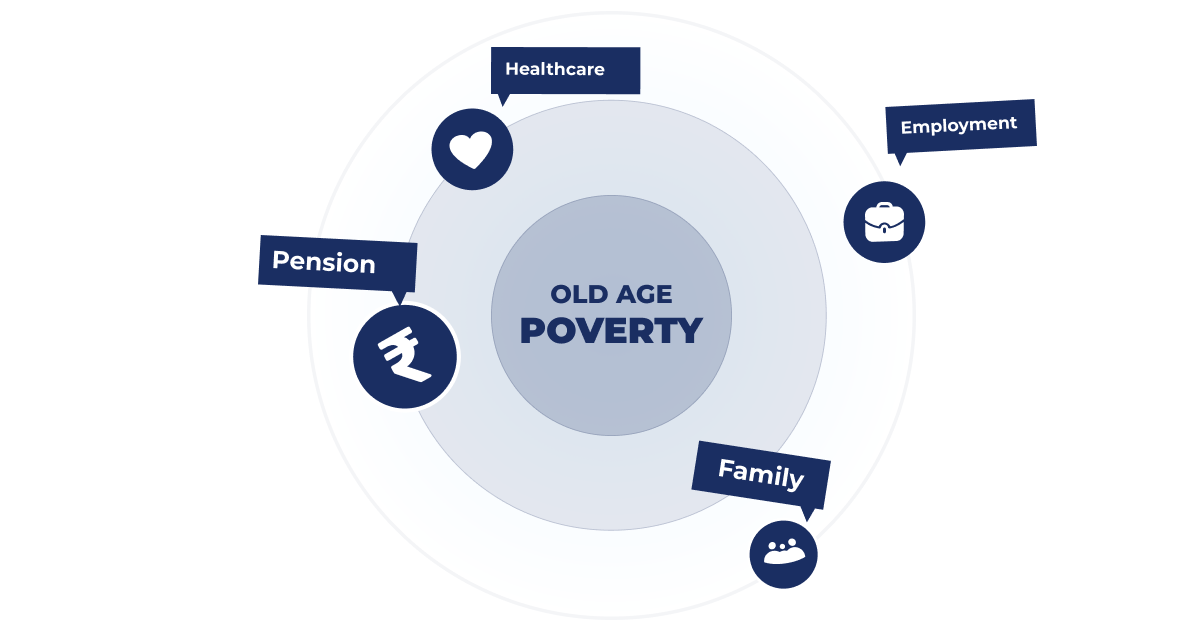
Old age poverty is a significant concern in India. As people grow older, they often face a decline in their earning capacity due to various factors, such as retirement, health issues, or reduced physical strength.
With limited or no income, seniors become vulnerable to financial hardships and poverty. India's elderly population is projected to grow substantially in the coming years, making it even more crucial to address the issue of old age poverty.
Challenges Faced by the Elderly People
1. Lack of Pension Coverage: Many elderly individuals in India do not have access to pension schemes, leaving them without a regular source of income after retirement.
2. Healthcare Expenses: Seniors often face increased healthcare costs due to age-related illnesses, and without adequate health insurance, these expenses can push them into poverty.
3. Inadequate Family Support: Traditional family structures are changing, with more nuclear families and migration for work, which can lead to reduced family support for elderly parents.
4. Limited Employment Opportunities: Finding employment as an older adult can be challenging, as many employers prefer younger workers. This limits the opportunities for seniors to generate income.
The Role of Social Security in Reducing Old Age Poverty
Social security programs are designed to address these challenges and provide financial protection to older individuals. In India, several social security initiatives play a crucial role in reducing old-age poverty:
1. Old Age Pension Schemes:
Many Indian states offer old age pension schemes, providing financial support to eligible senior citizens. These schemes vary from state to state and may include monthly pension payments, which can be a lifeline for many elderly individuals.
2. National Social Assistance Program (NSAP):
The National Social Assistance Program or NSAP, a centrally sponsored scheme, provides financial assistance to the elderly, widows, and disabled individuals. It includes the Indira Gandhi National Old Age Pension Scheme (IGNOAPS) and the National Family Benefit Scheme (NFBS).
3. Employees' Provident Fund (EPF) and Employee Pension Scheme (EPS):
EPF and EPS are retirement benefit schemes for employees in the organized sector, ensuring a source of income after retirement. Contributions are made by both employees and employers, helping build a retirement corpus.
4. Pradhan Mantri Shram Yogi Maandhan (PMSYM):
The Pradhan Mantri Shram Yogi Maandhan or PMSYM is a voluntary pension scheme for unorganized sector workers, including senior citizens. It offers a regular pension to beneficiaries after the age of 60.
Atal Pension Yojana (APY):
The Atal Pension Yojana or APY is another voluntary pension scheme aimed at ensuring financial security for elderly individuals. It allows individuals to contribute and receive a fixed pension after retirement.
Benefits of Social Security for the Elderly
1. Financial Security: Social security programs provide a reliable source of income for senior citizens, reducing their financial vulnerability and dependence on family members.
2. Healthcare Support: Some social security schemes also cover health-related expenses, ensuring that the elderly can access medical treatment when needed.
3. Dignity and Independence: With financial security, seniors can maintain their dignity and independence, making it easier for them to meet their basic needs and participate in society.
4. Reduced Burden on Family: Social security programs alleviate the financial burden on the families of elderly individuals, allowing them to lead a more comfortable life.
5. Economic Growth: Social security can boost economic growth by ensuring that older individuals have disposable income to spend on goods and services, which in turn supports businesses and the overall economy.
Challenges in Implementing Social Security
While social security programs have the potential to reduce old-age poverty, there are challenges in their implementation:
1. Coverage Gaps: Not all elderly individuals in India are covered by social security programs. There are eligibility criteria, and some seniors may fall through the cracks.
2. Administrative Issues: Efficient administration and disbursement of benefits can be a challenge, leading to delays and bureaucracy.
3. Financial Sustainability: Ensuring the long-term financial sustainability of these programs is crucial to continue providing benefits to future generations of senior citizens.
4. Awareness and Access: Many elderly individuals are unaware of the available social security programs or face difficulties in accessing them due to bureaucratic hurdles.
5. Informal Sector Workers: Social security coverage for those working in the informal sector remains limited, and expanding these programs to reach this demographic is a challenge.
6. Inflation and Economic Factors: The value of pension payments may erode over time due to inflation, necessitating periodic adjustments to maintain the real purchasing power of beneficiaries.
How PensionBox is Helping Reducing Old Age Poverty in India?
PensionBox is an online platform that helps individuals save for retirement and receive a regular pension income. By providing a convenient and accessible way for people to invest in pension funds, PensionBox is helping reduce old-age poverty in India.
Here are some ways in which PensionBox is making a positive impact:
1. Encouraging Retirement Savings: One of the primary reasons for old-age poverty is the lack of savings during working life. PensionBox encourages individuals to start saving for retirement early on, thereby ensuring that they have enough money saved up to maintain their standard of living during their golden years.
2. Providing Accessible Investment Options: Traditional pension plans often come with high minimum investment requirements, making it difficult for many people to participate. PensionBox eliminates this barrier by offering affordable investment options with lower minimum investment requirements, making it easier for more people to save for retirement.
3. Offering Flexibility: PensionBox provides users with various investment options, allowing them to choose where their money is invested. Users can choose from a range of pension fund managers and track their savings across government-backed schemes like the Employees' Provident Fund (EPF) and the National Pension Scheme (NPS).
4. Ensuring Regular Income: Once users reach retirement age, PensionBox helps users plan for a steady income stream from the annuity portion of their NPS corpus. This helps mitigate the risk of outliving one's resources and facing financial difficulties during old age.
5. Promoting Financial Literacy: PensionBox educates users about retirement planning and the importance of starting early. They provide resources and tools to help users understand retirement planning better and make informed decisions about their investments.
By addressing the root causes of old-age poverty, PensionBox plays a vital role in reducing financial insecurity among India's elderly population. Their user-friendly platform, flexible investment options, and commitment to financial literacy and awareness contribute significantly to promoting retirement readiness and ensuring a dignified life for seniors.
Wrapping Up
Social security programs play a vital role in reducing old-age poverty in India by providing financial support and assistance to the elderly. These programs offer a lifeline to senior citizens who may otherwise face financial hardship and insecurity in their old age.
While there are challenges in implementing social security, the government and society must work together to ensure that these programs are effective, accessible, and sustainable. With an aging population, it is imperative to prioritize social security to promote the well-being and dignity of senior citizens in India.
2,00,000+ Stories
Hope they inspires you as well.

their NPS stories for a golden retirement.







PensionBox simplifies the National Pension System(NPS), the government's pension scheme for private employees both for retail users and HRs/companies.
If you don’t have an NPS account, you can simply open your pension account within 2 minutes and if you have NPS PRAN already, you will be able track, invest and manage everything free of charge with best user experience.
We never touch or hold your money directly, your investments go safely to your chosen pension fund through approved channels.
We are built with Zerodha as POP , ensuring transparency, data security, and peace of mind. Your retirement savings are protected by regulation and secured by technology.
That’s why, PensionBox brings transparency, zero charges, timely support and freedom to select any pension fund so that you get the best experience investing in NPS & be better future ready.
That’s not it, we help you & your company together to maximise contribution and tax savings with minimal charges & best user experience.
If you are an existing zerodha user then you get a fast login or sign up using kite ID.
Once you are onboarded with kite ID, you get free access to
- Open NPS in 2 minutes
- Track existing NPS
- POP shift or CRA shifting
- Invest in one time or create SIP in NPS
- Withdraw NPS requests & instant withdraw tier 2
- Create your dream retirement plan
- Open NPS Vatsalya for your kid
- Share with HR (To unlock more tax benefits)
- Employer Contribution:
- Contributions made by your employer to your NPS account are tax-free up to 14% of your basic salary under Section 80CCD(2). Do connect us with your HR to enable this for you.
Tax Benefits in Old Tax Regime - Self-Contribution:
- Deduction up to ₹1.5 lakh under Section 80C.
- Additional deduction of ₹50,000 under Section 80CCD(1B) — exclusive to NPS investments!
- This allows you to claim a total deduction of up to ₹2 lakh every year on your NPS contributions.
- Employer Contribution:
- Contributions made by your employer to your NPS account are tax-free up to 10% of your basic salary (Basic + DA) under Section 80CCD(2). Do connect us with your HR to enable this for you.
- This is over and above your personal deduction limits, giving you extra tax efficiency.
Feel free to book a free call to learn more about NPS, NPS Vatsalya, Corporate NPS & PensionBox or contact the support team.