
Is corporate NPS a better option than Provident Fund?

Ah, the age-old question every salaried person eventually faces: Should I stick with the good ol’ Provident Fund (PF), or give this shiny new Corporate NPS (CNPS) a shot? With retirement plans being less about rocking chairs and more about smart investments now, it’s high time we compare these two contenders. So, grab your cup of chai and let’s decode the mystery of NPS vs PF, one byte at a time!
Round 1: What's What?
Let’s start simple. The Provident Fund (PF) is like your comfort food—familiar and safe. Every month, a chunk of your salary is parked in your PF account. Your employer matches it, and the amount earns fixed interest (decided by the government). Not bad, right? Enter NPS, or more specifically, Corporate NPS (CNPS)—the newer, market-linked retirement plan where you and your employer contribute towards a retirement corpus. Unlike PF, CNPS gives you the flexibility to choose between equity, government bonds, and corporate debt. That means potentially higher returns.
Round 2: Returns—Fixed or Fabulous?
This is where things heat up. PF offers a stable return, currently around 8.15% per annum (subject to change). It’s predictable, but not exactly exciting. CNPS, on the other hand, dances to the market’s tune. Over the long term, NPS can offer returns between 9-12%, depending on your investment choice. The equity exposure in CNPS can help beat inflation, which your PF often struggles with. If you’re someone who loves watching their money grow (and doesn’t mind a little risk), CNPS is your friend.
Round 3: Tax Benefits – Everyone’s Favorite Part
Both PF and CNPS give you tax benefits under Section 80C. But here’s the CNPS twist—PensionBox tells us that CNPS also gives an extra Rs. 50,000 tax deduction under Section 80CCD(1B). That’s on top of the 80C limit! Plus, if your employer contributes up to 10% of your basic salary in old regim and 14% of basic salary in new regim to CNPS, that part isn’t taxed either. PF doesn’t offer that additional advantage.
Round 4: Flexibility & Control
PF is automatic. Set it, forget it. But CNPS through platforms like PensionBox? You get to tweak asset allocation, track performance, and even make voluntary contributions when you have extra cash lying around. You’re in the driver’s seat. It’s like comparing a flip phone with a smartphone—both make calls, but one gives you way more options.
Final Verdict: CNPS or PF?
If you're risk-averse and prefer a steady path to retirement, PF might still be your go-to. But if you're aiming for higher returns, better tax breaks, and more control—CNPS via platforms like PensionBox is a clear winner. Of course, you don’t have to pick just one. Many people smartly combine both—rely on PF for stability and CNPS for growth. Retirement isn’t about choosing one box. It’s about opening the right boxes at the right time—and CNPS on PensionBox might just be the upgrade your future needs.
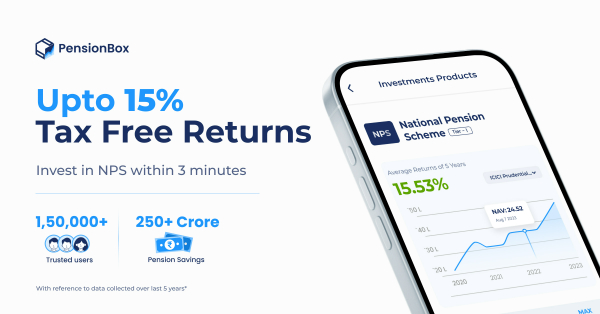
PensionBox simplifies the National Pension System(NPS), the government's pension scheme for private employees both for retail users and HRs/companies.
If you don’t have an NPS account, you can simply open your pension account within 2 minutes and if you have NPS PRAN already, you will be able track, invest and manage everything free of charge with best user experience.
We never touch or hold your money directly, your investments go safely to your chosen pension fund through approved channels.
We are built with Zerodha as POP , ensuring transparency, data security, and peace of mind. Your retirement savings are protected by regulation and secured by technology.
That’s why, PensionBox brings transparency, zero charges, timely support and freedom to select any pension fund so that you get the best experience investing in NPS & be better future ready.
That’s not it, we help you & your company together to maximise contribution and tax savings with minimal charges & best user experience.
If you are an existing zerodha user then you get a fast login or sign up using kite ID.
Once you are onboarded with kite ID, you get free access to
- Open NPS in 2 minutes
- Track existing NPS
- POP shift or CRA shifting
- Invest in one time or create SIP in NPS
- Withdraw NPS requests & instant withdraw tier 2
- Create your dream retirement plan
- Open NPS Vatsalya for your kid
- Share with HR (To unlock more tax benefits)
- Employer Contribution:
- Contributions made by your employer to your NPS account are tax-free up to 14% of your basic salary under Section 80CCD(2). Do connect us with your HR to enable this for you.
Tax Benefits in Old Tax Regime - Self-Contribution:
- Deduction up to ₹1.5 lakh under Section 80C.
- Additional deduction of ₹50,000 under Section 80CCD(1B) — exclusive to NPS investments!
- This allows you to claim a total deduction of up to ₹2 lakh every year on your NPS contributions.
- Employer Contribution:
- Contributions made by your employer to your NPS account are tax-free up to 10% of your basic salary (Basic + DA) under Section 80CCD(2). Do connect us with your HR to enable this for you.
- This is over and above your personal deduction limits, giving you extra tax efficiency.
Feel free to book a free call to learn more about NPS, NPS Vatsalya, Corporate NPS & PensionBox or contact the support team.